"November to February is the dry season, so that's the best time" is the standard advice, and following it can land you in the worst possible month for your destination. Thailand stretches more than 1,600km from north to south, and in any given month the weather differs sharply from one part of the country to another.
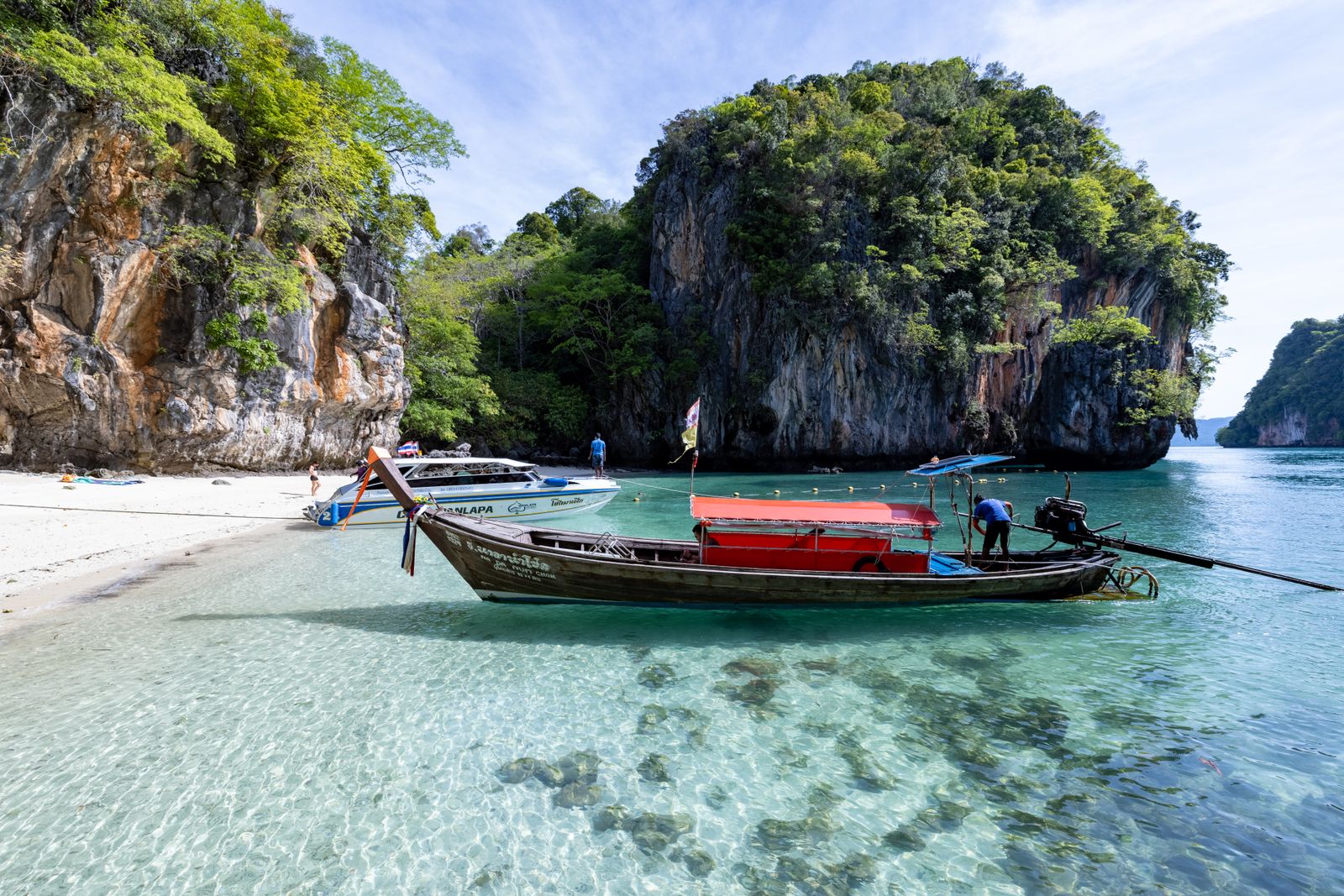
The southern beaches are the clearest case: the rainy season on the west coast is almost the mirror image of the east. August puts Phuket in the middle of its wettest months, while Samui in that same August is in fine weather.
Thailand has three seasons
The Tourism Authority of Thailand divides the year into a dry season, a hot season and a rainy season.
Dry season (November to February) brings little rain and the lowest temperatures of the year, and is the most comfortable time to travel. Bangkok sits around 32°C by day and 22°C at night in December. In the mountains of the north, however, temperatures can drop close to 0°C between midnight and early morning.
Hot season (March to May) brings strong sun and the highest temperatures of the year. April is the peak, and in recent years some areas have exceeded 40°C.
Rainy season (June to October) is the wettest part of the year, though as explained below it does not rain all day.
Thailand averages around 29°C across the year. In Bangkok temperatures stay within roughly 22°C to 35°C, and there is no winter in the sense that visitors from temperate countries would recognise.
The right month depends on where you are going
The Tourism Authority of Thailand states plainly that the best season differs between the Andaman coast and the east on one hand, and the Gulf coast on the other. The monsoons arrive from different directions.
The Andaman coast (Phuket, Krabi) has its wettest months from May to October. Pattaya, on the eastern seaboard, follows a similar pattern and is usually described as dry from November to March, hot in April and May, and in "green season" from June to October.
The Gulf coast (Samui, Pha Ngan) peaks from October to December. February to June brings clear weather and calm seas, and even from July to September the rain tends to be an hour-long squall in the late afternoon.
This difference changes real decisions. Over the New Year period Phuket is at its best while Samui is at its wettest; in the northern-hemisphere summer holidays the relationship is reversed. If the beach is the point of the trip, pick the destination to fit the month rather than the other way around.
The rainy season is not all-day rain
The rainy season does not need to be avoided. Rain in Thailand tends to fall as one or two hours of heavy squalls rather than a continuous drizzle, and the air is cooler once it passes.

There are advantages, too. Flights and rooms cost less, and the crowds at major sights are thinner than in the dry season. A plan that mixes in indoor attractions and leaves the late afternoon free for a downpour works perfectly well.
What does not work well in the rainy season is an itinerary that depends on boats to the islands. Rough seas cancel sailings, and a single cancellation can unravel a schedule.
In the north, watch for air pollution from February to May
In Chiang Mai and elsewhere in the north, agricultural burning in the surrounding hills makes air quality deteriorate seriously each year from around February to May. March and April are the worst, with days that rank among the most polluted anywhere in the world. The start and end shift from year to year, but if you can choose, late February to early May is the period to avoid.
For the north, November to January offers the best conditions. To check the situation on a given day, Air4Thai, run by Thailand's Pollution Control Department, publishes readings from individual monitoring stations. Note that the PM2.5 figure shown on our home page is for Bangkok and can differ greatly from conditions in the north.
Decide about Songkran in mid-April before you book
Songkran, the Thai new year, is set by the government as a public holiday from 13 to 15 April. The water festival itself does not necessarily match those three days. It shifts by region and by year: some years Bangkok has started on 11 April, and one year Pattaya held its finale on 19 April. Substitute holidays are added in some years. Check the dates for the year you are travelling.
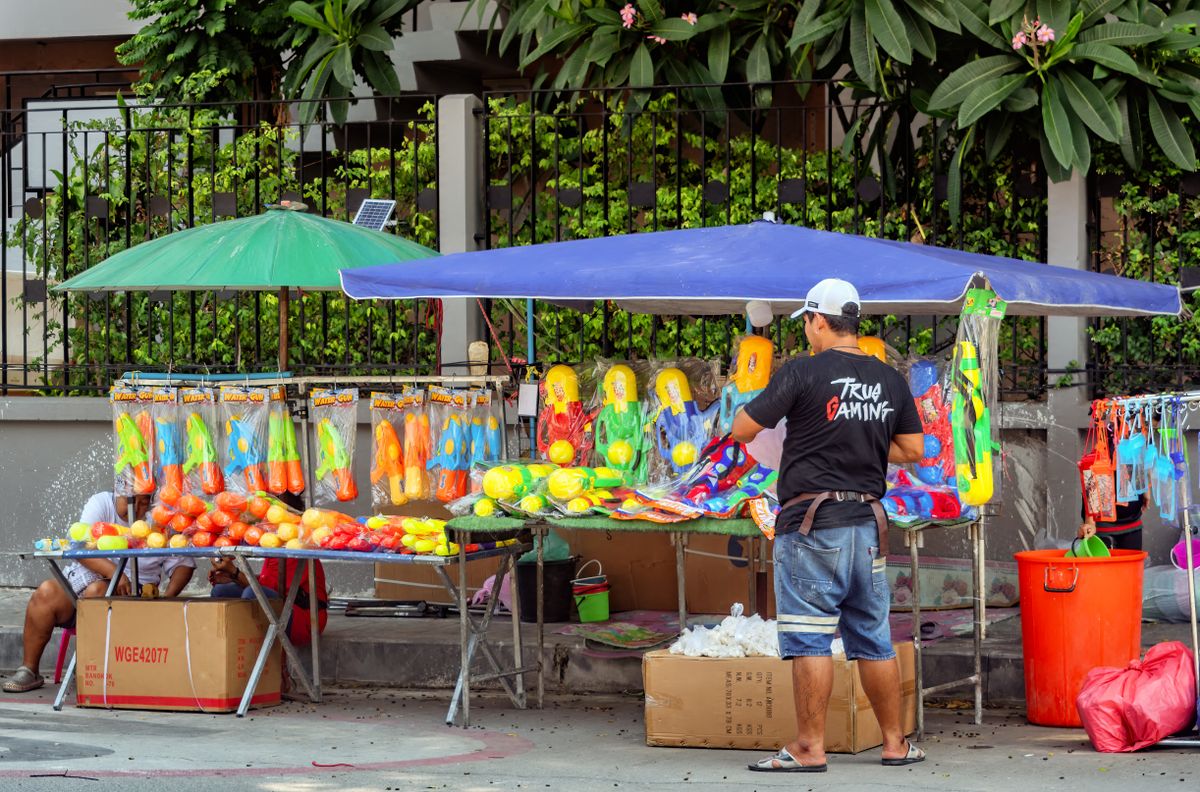
There are practical consequences. For roughly a week around the holiday, domestic transport and accommodation fill up, shops and offices close, and places that are normally busy can be deserted. Road accidents also rise: in Bangkok in 2026, around 85% of the 20 road deaths during the period involved motorcycles.
If you want to join the festival it is worth planning around, but for quiet sightseeing this is the week to avoid.
If you cannot decide
For a first trip with a free choice of dates, November to February is hard to get wrong. Bangkok and the Andaman beaches are both at their best then. If the north is on your list, go before the pollution season starts in February — November to January.
If the month is already fixed, choose the destination to match it: the Gulf coast beaches from June to September; the south or the interior rather than the north in March and April; Phuket, Bangkok or Chiang Mai over the New Year.
Sources: Weather in Thailand (Tourism Authority of Thailand), Weather in Pattaya (TAT), Beach resorts in Thailand (TAT). Figures for the northern pollution season and the Songkran period are drawn from news reporting.