What catches people out on a trip is rarely the sightseeing. It is the ordinary business of the day: where the drinking water comes from, what to do with the paper in a toilet, what you can pay with. All of it is easier if you know beforehand.
This article concentrates on the areas where travel writing tends to blur fact and folklore, and separates what public bodies actually say from what merely gets repeated.
The reason not to drink the tap water is inside the building
Japan's quarantine service advises travellers to Thailand not to drink tap water as it comes. The reason, though, is not that Thailand's water is poor. Read what Bangkok's own waterworks says and it becomes clear where the problem sits.
The water leaving the plant is held to a high standard. The Metropolitan Waterworks Authority sets a turbidity limit of under 1 NTU for the water it treats and pumps out — a fifth of the health ministry's threshold for drinkable tap water, and a quarter of the WHO's guideline figure.
What happens next is the issue. In Thai buildings, the mains rarely feed the tap directly: water is usually held in a storage tank in the building and pumped from there to each unit. The waterworks describes what happens once water passes the meter, enters that tank and sits there:
- Turbidity you cannot see settles gradually to the bottom of the tank
- The chlorine that was sufficient in the distribution main dissipates in the tank, and may no longer be enough to suppress bacteria that get in afterwards
- Dust, insects and small organisms enter, and become a breeding ground for algae and larvae
- The accumulated sediment accelerates rust and corrosion in the tank
For that reason the waterworks recommends cleaning storage tanks at least every six months, and runs the cleaning service itself for homes, buildings, hotels, hospitals and factories. It notes that the US CDC, the American Water Works Association and the WHO likewise recommend regular cleaning.
In other words, the quality at the tap depends on how the building maintains its tank. As a visitor you have no way of knowing when the tank where you are staying was last cleaned. So you don't drink it — that is the practical conclusion.
Bottled water is available in any convenience store or supermarket.
In the dry season the tap water can turn salty
There is a seasonal change as well. When the river runs low in the dry season, seawater pushes up the Chao Phraya and can reach the intake point for the water supply. When that happens, the taste of the tap water shifts at certain hours in the parts of Bangkok, Nonthaburi and Samut Prakan that lie on the eastern side of the river.
The waterworks says that once salinity exceeds 250mg of chloride or 200mg of sodium per litre, it is above the WHO's guideline and unpleasant to drink. On that situation, the authority passes on the health ministry's advice:
- For people in normal health there is no effect on health. The taste simply changes
- The sodium in tap water is a very small quantity next to what an ordinary diet contains
- If cooking with it during this period, go easier on the seasoning
- Those who should avoid it: people with kidney, heart, blood pressure, diabetic or neurological conditions, the elderly, and small children
- Use bottled water or water filtered by reverse osmosis instead
- Pets should not drink it either
The situation can persist until the rains arrive. The waterworks publishes water quality daily, viewable through its app and social accounts.
None of this changes the conclusion for a visitor — you were not going to drink it anyway. But knowing that the water may taste salty when you brush your teeth or shower saves you worrying that something is wrong with your accommodation.
You may also notice a smell of chlorine at the tap. That is the disinfection working. The waterworks says it dissipates on its own if you fill a container and leave it uncovered for around twenty minutes.
Brushing teeth and showering
Here the official advice and everyday practice diverge.
In practice, plenty of people brush their teeth, rinse and shower with tap water — Thai people certainly, and many foreign residents too. Some households fit a filter if they are particular about the water, but keeping bottled water aside for brushing is not common.
Official travel advice is more conservative. The US CDC, the UK's TravelHealthPro and the Canadian government all recommend bottled or disinfected water for brushing in countries where the tap water is not safe. None of them names Thailand; it is general guidance for countries with inadequate sanitation.
Which you follow is a question of how you weigh the risk. One thing worth holding onto: the quantity swallowed differs by orders of magnitude. Drinking a glass of water is a different proposition from what stays in your mouth while brushing.
In practical terms:
- Drink bottled water. That part does not move
- Brushing, rinsing and showering with tap water is normal practice locally
- If you have a delicate stomach, a day when illness would be costly, or small children with you, use bottled water for brushing too — it is one extra bottle
Packaged ice and everything else are different questions
Ice is regulated as a food in Thailand. Production facilities are held to manufacturing standards (GMP), with fines and suspension of production for those that fall short.
Bagged ice carries labelling requirements. According to the Thai FDA, edible ice must show the words "ice fit for consumption" in blue lettering, while ice intended only for chilling must show "ice not fit for consumption" in red lettering. The label must also carry the FDA registration number, the producer's name and address, and the net weight.
The FDA asks consumers to check the following before buying:
- The bag is clean, sealed, and not torn
- The ice is clear, with no unusual colour, smell or staining
- No dust or foreign matter is visible inside the ice
- The label carries the FDA number and the blue "fit for consumption" wording
The bagged ice sold in convenience stores and supermarkets is produced and distributed under this regime.
Unlabelled ice is a judgement you make yourself
Ice sold loose, ice from a dispenser, and ice served to you in a restaurant carry no label. The FDA itself notes that such ice can be subject to microbial contamination.
Studies have found problems. A survey of twelve premises in one district found coliform bacteria above the permitted level in every sample taken. A survey of iced desserts sold in Bangkok's tourist areas found contamination in close to a third.
That said, this is not a case of "street stall ice is dangerous." Most places are fine, and a great many people drink iced drinks there every day without incident. That some premises fail a survey is a different statement from the one in front of you being one of them.
What the FDA suggests looking at:
- The ice itself — is it clear, free of staining or discolouration
- Whether the storage place and container are clean and covered
- Whether other food or drink is being chilled in with the ice
Nor is there a single cause. Peer-reviewed work points to insufficient water treatment at production plants, contamination from the sacks used in transport, and how ice is scooped and stored at the point of sale. Regulation existing is not the same as everything in circulation being safe. In February 2026, E. coli was found at the plant of a well-known ice brand and the authorities took action.
In the end, some of this is your own call. Look at the place, and if something bothers you, ask for the drink without ice. That is enough.
"Cylindrical ice with a hole is safe" is half right
Ice in cylinders with a hole through the middle does come from industrial plants. It is frozen from the inner wall of a tube and the unfrozen water at the centre drained before it solidifies, leaving the hole. Reading the shape as a sign of factory production is factually sound.
But factory-made does not mean safe. As above, shortcomings at the production stage are documented too, and nothing about the shape tells you what happened during transport and handling afterwards.
What to actually do
There is no need to avoid cold drinks. Going short on fluids in that heat is the greater risk by far.
- Buying bagged ice: choose one with the blue wording and the FDA number
- Ice served to you: judge by the ice and its container — not by the shape
- On a day when illness would be costly (the night before a flight home), asking for no ice is a reasonable call
Japan's quarantine service likewise advises choosing eating places that are evidently well run.
As a rule, paper does not go down the toilet
In many Thai toilets, used paper goes in the bin beside the bowl rather than down it. Signs asking you not to flush are common — in Thai, "ห้ามทิ้งกระดาษชำระลงในโถส้วม".
The explanation usually given is that septic systems are the norm and paper disrupts them. No official source confirming this could be found.
Newer buildings, airports and larger hotels often do handle flushed paper, but you cannot tell from the outside, so follow the sign and the bin. A lidded bin next to the toilet means paper goes in the bin. When in doubt, do not flush — nothing goes wrong that way.
Know where the toilets are before you need one
This is where the gap with Japan is widest, and where not knowing genuinely causes trouble.
Coming from Japan, you assume there will be a toilet at the station, or a public one somewhere on the street. In Thailand, railway stations essentially do not have toilets. Public toilets on the street are rare too.
The realistic options are limited:
- Shopping malls — the most reliable, and plentiful in central Bangkok
- Hotel lobbies — usually usable even if you are not staying there
- Large petrol stations — the option along highways and outside the cities
- Department stores, large bookshops, café chains — nominally for customers, but workable
Do not count on convenience store toilets. 7-Eleven has stated publicly that whether a toilet can be used is up to the individual store, but in practice you will almost never find one that lets you. Bolting into a convenience store the way you would in Japan leaves you no better off.
Bus terminals, markets and tourist sites do have public toilets. Some charge. A health ministry campaign in 2013 saw 70 of the country's 117 bus terminals drop the charge, but it continues at the rest, where operation is contracted out. It is usually 5 to 10 baht, so carry coins. With only notes you cannot pay, and that is a common way to get stuck.
And toilet paper is often not provided — including where there is a charge. A packet of tissues in your bag is the single most effective preparation.
Thailand's health ministry does maintain a standard for public toilets, built around three requirements — clean, sufficient in number, and safe — covering twelve categories of premises including tourist sites, markets, bus terminals, petrol stations, temples and shopping malls.
Go before you leave, and again whenever you are in a mall. That is the reliable approach.
What you will find in a Thai toilet
Beside the bowl there is often a hose with a lever-operated nozzle — "สายฉีดชำระ" in Thai — used for washing. It is fitted to both western and squat toilets and is in general use. The pressure can be considerable, so squeeze the lever gently at first.
Squat toilets remain in rural areas and older buildings. Where you find one, there may be a tub of water and a dipper beside it: you fill the dipper and pour it into the pan to flush.
Doors are marked "ชาย" for men and "หญิง" for women. Cities generally add English; rural places may not.
Convenience stores cover more ground than at home
Thai convenience stores work much as you would expect, though the range of what they handle is wider:
- Paying utility and other bills
- Topping up mobile phone credit
They are generally open around the clock, and in built-up areas the next one is rarely more than a few hundred metres away.
ATMs are often installed outside the store, but not at every branch. You cannot count on finding one the moment you need cash, so withdraw while you have the chance.
Alcohol sales hours changed in May 2026
This is where outdated information persists.
Thailand long restricted the hours during which alcohol could be sold: 11:00 to 14:00, and 17:00 to 24:00. Outside those windows, no shop or supermarket would sell it. The restriction dated back to a 1972 order.
Since 29 May 2026, purchases have been possible continuously from 11:00 to 24:00. The 14:00–17:00 gap was lifted, following a six-month trial in late 2025, and the change was made permanent.
In other words, "you cannot buy alcohol in the early afternoon" no longer describes Thailand. Guidebooks and websites still carry the old rule.
Sales outside those hours remain restricted, and conditions differ in some places — airports handling international passengers are treated separately.
A few days a year, nothing is served at all
Separately from the clock, there are days in the Buddhist calendar when alcohol is not handled at all — the dry days.
It is not only that shops will not sell it. Restaurants, food stalls and bars stop serving as well, so there is nowhere to drink that day. Five such days are set by a 2015 Prime Minister's Office notification, and this year's change to the hours left them untouched.
Beyond that, bars and karaoke places often do not open at all. There is little point trading on a day they cannot serve. If you had an evening planned, plan something else for that date.
A 2026 notification does allow service on those days in certain places — airports, hotels, entertainment venues and designated tourist areas — so where you are staying and where you go changes what you will find.
These days follow the Buddhist calendar, so the dates move from year to year. Checking once your dates are fixed saves you finding out on the day.
What you can pay with depends on where you are
QR payment is widespread in Thailand, but that does not mean a visitor can simply use it. The situation differs by place:
| Place | Cash | Card | QR |
|---|---|---|---|
| Street stalls, markets | essential | rarely | the stall accepts it (visitors need setup) |
| Small independent eateries | essential | rarely | as above |
| Chain restaurants | yes | yes | yes |
| Convenience stores | yes | yes (minimum spend applies) | yes |
| Shopping malls | yes | yes | yes |
| Metered taxis | essential | rarely | depends on the driver |
| Ride-hailing apps | yes | via the app | yes |
| Temple admission | essential | no | no |
This is the general tendency; individual places vary.
Convenience store cards have a minimum spend
To pay by card at 7-Eleven, the purchase must come to at least 200 baht. That threshold was lowered from 300 baht in August 2023. A single drink goes on cash.
Visa, Mastercard and UnionPay are accepted, as are phone-based methods such as Apple Pay and Google Pay.
Other convenience stores and supermarkets set a similar minimum spend. Keep small notes and coins on you for small purchases.
QR payment runs into the Thai bank account requirement
The system behind QR payment in Thailand is PromptPay, and using it requires a Thai bank account. QR codes are stuck up at street stalls, but a short-term visitor cannot simply use them.
There is, however, a way around it for visitors.
TAGTHAi, an app, offers "Easy Pay" — an e-wallet aimed at travellers. You apply at a Kasikornbank foreign exchange booth with your passport, and the cash you were going to exchange goes into the wallet instead. Enter the six-digit PIN you are given into the app, and you can pay by PromptPay QR. There is no application fee, and you can withdraw cash without a card at Kasikornbank ATMs.
Think of it as an alternative to carrying the cash you exchanged.
That said, it does not work everywhere. PromptPay itself is in near-universal use locally, but the places that accept TAGTHAi's Easy Pay are a subset of those. Check for TAGTHAi signage at the counter before you pay. Where it is not accepted, you fall back on cash or another method.
Other e-wallets exist that a visitor can register for with a passport and a Thai mobile number, though topping up is limited to cash.
Rail fares work differently by line
Which payment works depends on the line, and 2026 brought a change large enough that older guidance no longer applies.
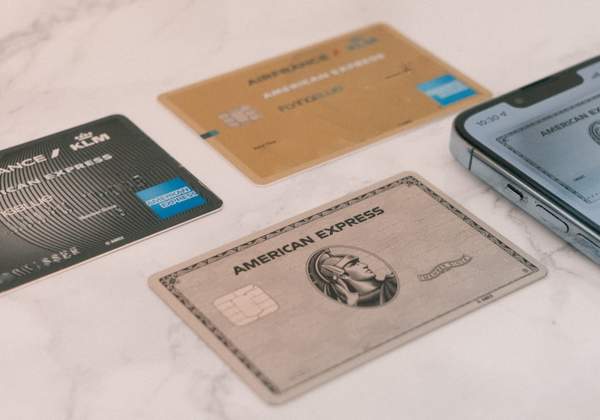
- MRT (metro) — moved entirely to contactless in June 2026. Tap a Visa or Mastercard contactless card at the gate and ride (UnionPay is also listed, but only specific Thai-issued cards; JCB and Amex are not named). The old MRT card, MRT Plus and tokens are withdrawn
- BTS (Skytrain) — the Rabbit card or a single-journey ticket. Foreign contactless cards are not usable as of September 2026
"Buy an MRT card, it's convenient" — that advice no longer holds. The city transit article covers the lines in detail.
On cash
You can withdraw cash from a foreign card at an ATM, but the Thai side charges a fee. Taking out a larger amount less often wastes less.
Large notes need thought too. A 1,000 baht note is often more than a street stall or small shop can change. Break it at a convenience store and keep smaller notes on you.
What to remember
Five things worth carrying with you:
- Buy bottled water. Do not drink from the tap
- Bagged ice: check for the blue wording. Ice served to you: judge the place and the container — not the shape
- Use toilets in malls and hotels. Stations, public toilets and convenience stores will not help. Paper goes in the bin; carry tissues and coins
- Alcohol is on sale 11:00 to 24:00. This changed in May 2026
- Always carry cash. Stalls, taxis and temples take nothing else, and cards have a minimum spend
Sources:
- Drinking water and eating places: Japan's quarantine service, FORTH
- Water quality standards and tank cleaning: Metropolitan Waterworks Authority
- Dry-season salinity: the same authority's drought guidance, based on health ministry advice
- Advice on brushing teeth: traveller guidance from the US CDC, the UK's TravelHealthPro and the Government of Canada
- Ice labelling and how to choose: Thai Food and Drug Administration
- Ice contamination studies: peer-reviewed work including Chavasit et al., Food Control 2011
- Alcohol sales hours: Tourism Authority of Thailand. The dry days are set by a 2015 Prime Minister's Office notification and a 2026 gazette notification
- Public toilet standard: Department of Health. Bus terminal charges from Bangkok Post (2013); the convenience store position from 7-Eleven's own statement
- Card minimum spend: press reporting (lowered from 300 to 200 baht in August 2023)
- MRT's move to EMV: Bangkok Expressway and Metro; accepted schemes from the operator's terms of use
- Mangmoom EMV card: Krungthai Bank
- Traveller e-wallet: TAGTHAi Easy Pay